Why Your Toilet Keeps Refilling & What to Do About It
Toilet keeps refilling itself? Learn the common causes, when to replace the tank “guts,” and when it’s smarter to invest in a brand new toilet.
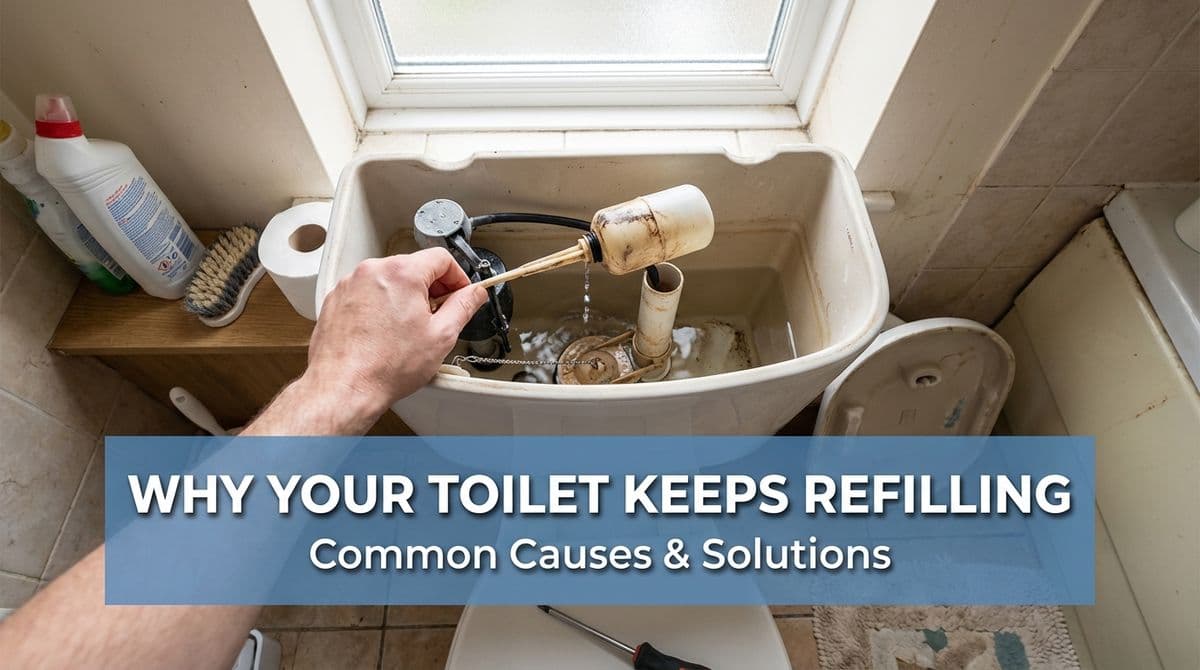
Why Your Toilet Keeps Refilling Itself
We recently got a call from a homeowner — let’s call her Karen — who was dealing with a really common (and really annoying) bathroom mystery.
Her toilet would sit there quietly, and then every so often the tank would kick on for a few seconds, refill, and shut back off. No one had used it, no one had flushed, and she’d already tried jiggling the handle. As she told us, “It must be losing water someplace.”
On the phone, Karen mentioned that the toilet was original to the house they bought about nine years ago, the inside of the tank was dark and worn, and she wasn’t sure if she should just replace the “guts” in the tank or put in a whole new toilet.
That’s exactly the kind of question we hear a lot, so we figured we’d walk you through how we think about it on a service call like Karen’s.
What That Random Refilling Sound Really Means
When a toilet periodically refills on its own, it’s almost always telling you one simple thing: water is slowly leaking out of the tank. As the water level drops, the fill valve thinks someone flushed and turns on to top the tank back up.
On calls like Karen’s, we usually start by explaining the three most common culprits:
- Worn or misaligned flapper – The rubber piece at the bottom of the tank that lifts when you flush and seals when you’re done. Over time, it warps, cracks, or gets coated with mineral deposits so it doesn’t seal well.
- Leaky overflow/flush valve – The vertical piece in the middle of the tank. If it’s cracked or the seal at the bottom is failing, water can sneak past even if the flapper is new.
- Fill valve/float set too high or going bad – If the water level is set above the overflow tube, water will constantly dribble into the bowl and the valve will keep turning on and off.
In Karen’s case, she’d already tried playing with the handle, which is what most people do first. The handle, chain, and flapper are all connected, so a sticky handle can keep the flapper from sealing, but if the handle moves freely and the toilet still “ghost flushes,” we start looking directly at the tank parts.
Simple Checks You Can Do Before Calling a Plumber
When we talk homeowners through this over the phone, there are a few safe checks we suggest:
- Look at the water level in the tank. It should sit about an inch below the top of the overflow tube. If it’s right at the rim or spilling over, the fill valve or float is set too high.
- Do a quick flapper test. Turn off the water to the toilet, flush once to empty the tank, then feel the flapper. If it’s stiff, crumbly, warped, or coated in gunk, it’s probably not sealing well.
- Listen for a quiet hiss. With the bathroom quiet, listen near the tank. A faint hiss or trickle often means water is running into the bowl even if you can’t see it clearly.
If any of those signs show up, it usually confirms what we suspected with Karen: the “guts” inside the tank are getting tired.
When Replacing the “Guts” Makes Sense
Homeowners often ask us exactly what “new guts” really means. In most cases, we’re talking about a toilet rebuild kit that includes:
- New flapper
- New fill valve and float
- New flush valve/overflow tube (in more complete kits)
- New tank-to-bowl bolts and gaskets if needed
On a service call like Karen’s, we walk through a few questions to decide if a rebuild is the right move:
- Is the bowl and base in good shape? No cracks, wobbling, or staining that won’t clean off.
- Are you generally happy with the toilet? Flushes well, doesn’t clog constantly, height and style work for you.
- Age and efficiency. If it’s under 20 years old and not a known “water hog,” a rebuild usually makes good financial sense.
If those boxes are checked, we’ll usually recommend replacing the internal parts instead of the whole toilet. A proper rebuild can give an older, solid toilet many more years of reliable service at a fraction of the cost of replacement.
Red Flags That It’s Time for a New Toilet
Sometimes, once we pop the lid off the tank, it’s clear that replacing parts would just be throwing good money after bad. Here are signs we look for that push us toward recommending a full replacement:
- Cracks in the porcelain – Even hairline cracks in the tank or bowl can turn into leaks or sudden breaks.
- Constant clogs or weak flushes – Especially on older low-flow models that never worked well to begin with.
- Badly rusted or corroded hardware – If bolts are fused in place or everything crumbles when we touch it, the labor cost to rebuild can rival a new toilet.
- Very old, inefficient toilets – Pre-1990s toilets can use 3.5–7 gallons per flush. Today’s standard is about 1.28–1.6 gallons.
In those situations, we’ll lay out the pros and cons. Sometimes we’ll price both a rebuild and a replacement so you can see that for a bit more upfront, you get a completely new, more efficient toilet with a warranty instead of more band-aids.
How We Help Homeowners Decide
When we arrived at Karen’s house, we did what we always do on a call like this:
- Inspected the inside of the tank for worn parts, cracks, and water level
- Checked the bowl and base for movement, damage, or leaks at the floor
- Looked for signs of previous repairs or mismatched parts
Then we talked through what we found in plain language and gave her options. That’s our usual approach: no pressure, just clear choices. In many cases, the fix is as simple as a new flapper and properly adjusted fill valve. Other times, a full rebuild or new toilet is the smarter long-term move.
When to Call a Professional
If your toilet keeps refilling itself and you’re not sure whether to live with it, patch it, or replace it, here’s our rule of thumb:
- Call us for an inspection if the toilet is older, you hear constant refilling, or you see water on the floor, in the basement ceiling below, or around the base.
- Try a DIY flapper replacement only if the shutoff valve works smoothly, you’re comfortable with simple tools, and the tank hardware isn’t heavily corroded.
- Plan on replacement if we find cracks, severe rust, or chronic performance issues.
A toilet that refills itself every few minutes isn’t just annoying — it can quietly waste hundreds or even thousands of gallons of water over time. Getting it checked out sooner rather than later usually saves money in the long run.
If your toilet sounds a lot like Karen’s, we’re always happy to take a look, explain what we see, and help you choose between new guts or a brand new throne.