What We Check During an AC Condenser Inspection
Most AC problems don't show up out of nowhere. They build up slowly - a bent fin here, worn insulation there, a compressor that's starting to struggle. By the time your system stops cooling, the warning signs have usually been there for a while. That's exactly why a proper condenser inspection matters.
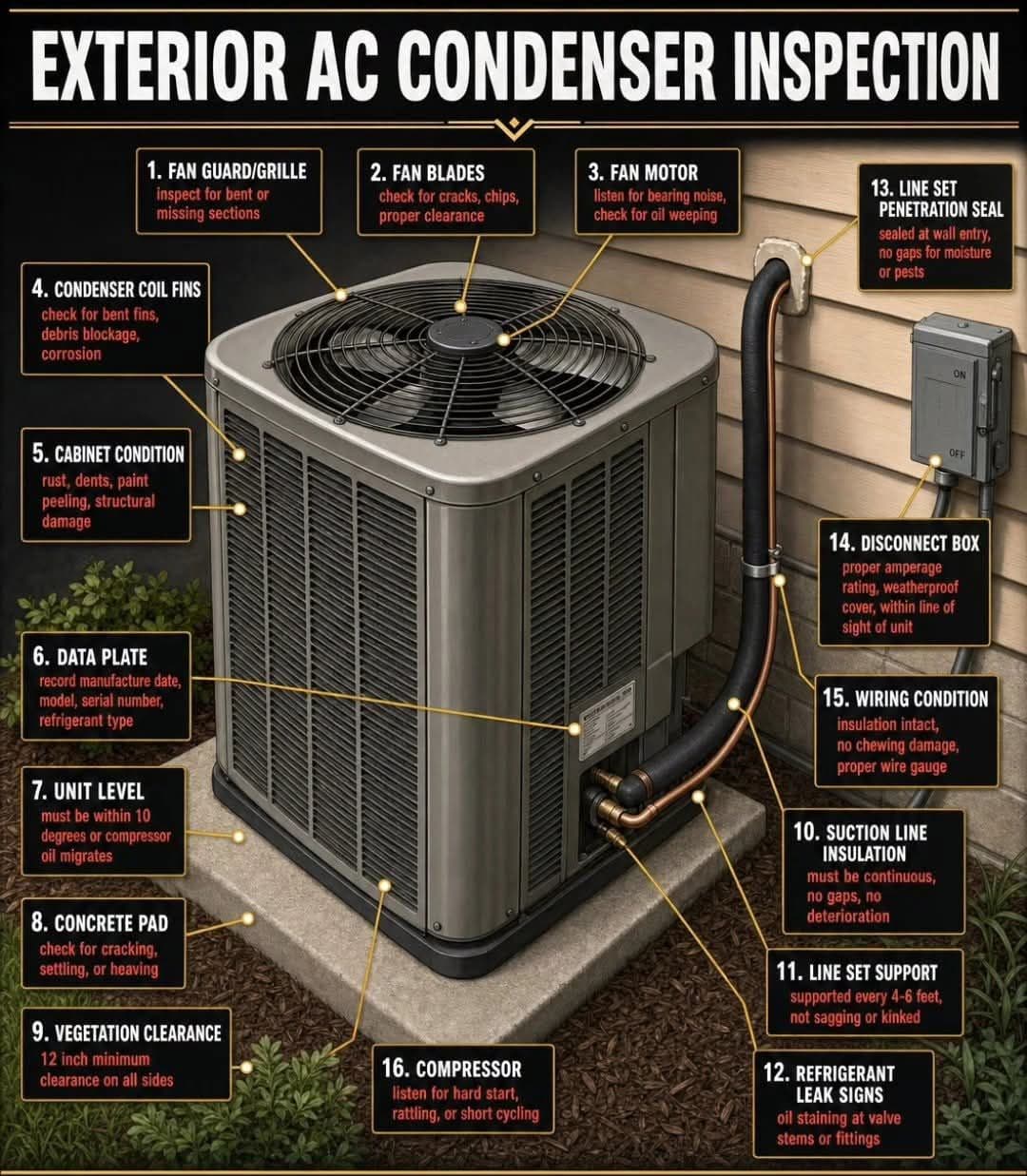
When we inspect an outdoor condenser unit, we're working through a detailed checklist - not just a quick glance. We check the fan guard and blades for damage, listen to the fan motor for bearing noise, and look at the condenser coil fins for blockage or corrosion. We're also checking the concrete pad for settling, making sure the unit is level, and verifying there's enough vegetation clearance on all sides.
The line set gets attention too. We check the suction line insulation for gaps or deterioration, verify the support spacing, look for refrigerant leak signs at the valve stems and fittings, and make sure the penetration seal at the wall entry is tight. The disconnect box and wiring condition are part of the inspection as well - things that are easy to overlook but can cause real headaches down the road.
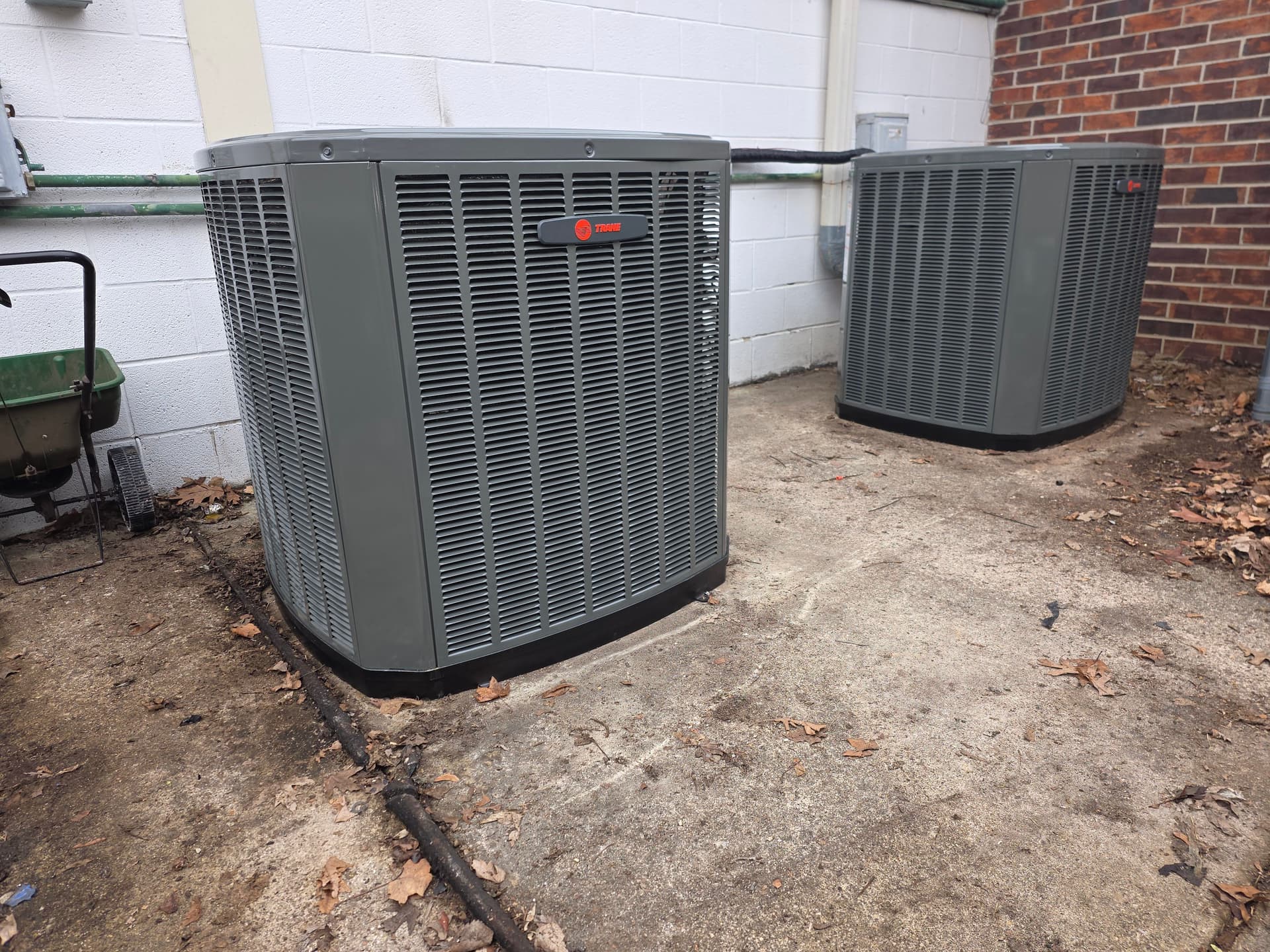
Whether it's a single residential unit or multiple commercial condensers, the process is the same. Every component plays a role in how efficiently and reliably your system runs. Catching a small issue now is almost always faster and cheaper than dealing with a breakdown in the middle of a heat wave.
Spring is a good window to get this done before cooling season is fully underway. If your AC has been sitting unused or you just haven't had it looked at in a while, a thorough inspection is a smart first step.